
This course is for 2024/25 entry.
-
Hear from alumni and academics about our Bar course, The Bar Vocational Studies (BVS).
-

Our staff are qualified teachers with extensive experience of legal professional practice.
-

Flexible study options with three Bar Vocational Studies (BVS) programmes.
-

Learn from realistic scenarios and case papers that simulate what you will encounter in practice
Bar Vocational Studies (BVS) LLM/PGDip/PGDip with Specialism Course overview
You will learn how to advise and represent a range of clients and prepare for the demands of a career at the Bar through this rigorous course, which is designed to reflect the work of the modern Bar.
You will develop skills and gain knowledge through interaction with professionals and peers. As lawyers and educators, our staff ensure you receive a high quality of education and personal support.
You can access support from our Pupillage Advisory Service (PAS) as soon as you accept an offer. We provide a comprehensive and thorough preparation for pupillage applications and pupillage itself.
PAS has extensive links with chambers and you will have the opportunity to attend a range of networking events, as well as advice from both staff and practitioners on completing pupillage applications and preparation for pupillage interviews, including mock interviews.
Accreditation

The Vocational Component is accredited by the Bar Standards Board. The BSB sets out the education and training requirements for becoming a barrister, which means once you graduate, and provided you complete the Inns qualifying sessions, you are qualified for Call to the Bar.
Awards
You can select to apply for one of the available exit points for this course.
- Master of Laws (LLM)
- Postgraduate Diploma (PGDip)
- Postgraduate Diploma with Specialism (PGDip with Specialism)
Who is this course for?
This Bar Vocational Studies (BVS) is primarily designed for those who want to qualify as a barrister. It includes the vocational stage of training for the Bar of England and Wales.
It will enable you to develop in depth legal knowledge and a wide range of legal skills, which could also be beneficial in a number of other professional careers.
Choosing to take the Postgraduate Diploma with specialism or LLM routes will give you the opportunity to further develop your CV and knowledge of specialist areas of law.
This is a blended learning programme, focussing on face-to-face teaching in small groups supported by extensive online materials to enhance classroom learning.
Structure
Awards
You can select to apply for one of the three available exit points for this course.
Master of Laws (LLM)
Duration:
- Full-time: 1 year
- Part-time: 2 years
Modules:
Please see below for a list of our elective modules.
Postgraduate Diploma (PGDip)
Duration:
- Full-time: 8 months
- Part-time: 20 months
Modules:
You will study the 10 compulsory modules required by the Bar Standards Board for Call to the Bar.
Postgraduate Diploma with Specialism (PGDip with Specialism)
Duration:
- Full-time: 10 months
- Part-time: 22 months
Modules:
Please see below for a list of our elective modules.
Modules
This programme has several routes, with different exit points depending on the route chosen.
Bar Vocational Studies PGDip
If you choose this route, you will study the 10 core modules set by the Bar Standards Board.
These form the Vocational Component of training for the Bar, for which you will be awarded the Postgraduate Diploma in Bar Vocational Studies.
This is the compulsory vocational qualification required to be eligible for Call to the Bar of England and Wales.
Bar Vocational Studies PGDip with Specialism
- This route includes the 10 core modules which make up the Vocational Component required to be eligible for Call to the Bar of England and Wales plus a Specialist Practice Component
- You choose two elective modules from a Specialist Practice area of your choice.
- Successfully complete the Vocational Component and the Specialist Practice Component, and you will be awarded a PGDip in Bar Vocational Studies with the relevant specialist area of practice you selected named in the award.
If you choose this route, you will study elective modules from a Specialist Practice area of your choice.
If you choose to complete the LLM or PG Dip (with specialism) you will need to complete two additional electives that are drawn from the below specialist areas of practice. Please note that specialisms/electives may be subject to change depending on student numbers, tutor availability, or course updates. This may affect the overall number of modules
Where there are a number of electives within a specialism, you select two electives from within that specialism.
LLM Bar Vocational Studies
In addition to the Vocational Component and the Specialist Practice Component, you can choose to complete either:
- a practice-focussed dissertation
- a clinical legal project (only available to full-time students).
Completion of the dissertation or clinical legal project in addition to the Vocational and Specialist Practice Components, allows you to achieve a master’s degree. This entitles you to the award of LLM in Bar Vocational Studies (with specialism).
This award includes the vocational qualification required for Call to the Bar of England and Wales.
PGDip Core modules
-
Advocacy: Cross Examination (10 credits)
This module aims to prepare you for the practice of advocacy as a barrister. You will gain the skills necessary to present evidence given by witnesses in a court or other tribunal. The module includes a full criminal trial.
-
Advocacy: Examination in Chief (10 credits)
This module will prepare you for the practice of advocacy as a barrister. You will gain comprehensive knowledge of the techniques used by advocates when conducting examination-in-chief of witnesses in courts or other tribunals. The module includes a full criminal trial.
-
Advocacy: Submissions (10 credits)
This module will provide you with comprehensive knowledge of techniques used by advocates in courts and tribunals when making submissions supported by skeleton arguments. You will develop a conceptual understanding of the role and techniques of an advocate.
-
Civil Litigation and Dispute Resolution (20 credits)
In this module, you will learn the principles of Civil Litigation and Dispute Resolution and develop your ability to apply them in practice. You will also develop a conceptual understanding of the overall framework for the conduct of civil cases.
-
Conference Skills (10 credits)
The module provides you with a comprehensive understanding of the role of a conference in a case and of the techniques which are commonly used in conducting a conference. Issues surrounding sensitivity towards client care and professional ethics will be explored
-
Criminal Litigation, Evidence and Sentencing (15 credits)
In this module you will learn the principles of Criminal Litigation, Evidence and Sentencing and develop your ability to apply them. You will also develop an understanding of the overall framework for the conduct of criminal cases.
-
Drafting Skills (15 credits)
This module will provide you with an understanding of the nature, function and value of statements of case, and the skills to draft a full range of statements of case and other documents in civil proceedings.
-
Professional Ethics (10 credits)
In this module you will learn the regulatory requirements prescribed by the BSB, including the Code of Conduct for the Bar of England and Wales. You will develop an understanding of the importance of ethical conduct in every aspect of your work.
-
Opinion Writing (15 credits)
This module will provide you with the skills needed to write concise and well- structured opinions in a variety of practice areas. You will receive guidance on how to adopt a professional, practical approach to the needs and objectives of your clients.
-
Legal Research (5 credits)
This module will provide you with key legal research skills, which underpin everything that a lawyer does, from preparing an oral submission, examination or cross-examination of a witness, advising orally or in writing, or drafting a statement of case.
PGDip with Specialism: Advanced Advocacy Skills
-
Advanced Criminal Advocacy (15 credits)
Elective module
This module aims to further the advocacy skills you developed in the Vocational Component in the context of advanced criminal practice. The module will also further your knowledge of substantive law and criminal procedure. -
Advanced Civil Advocacy (15 credits)
Elective module
This module aims to further the advocacy skills you developed in the Vocational Component in the content of advanced civil practice. The module will also further your knowledge of substantive law and civil procedure. -
Family Law (15 credits)
Elective module
This module focuses on the implications of the breakdown of family relationships, especially the effect on spouses and children, and including the role of local authorities in relation to the care of children.
PGDip with Specialism: Advanced Criminal Practice
-
Crown Court Practice (15 credits)
Elective module
This module builds on what you will have learned earlier when studying Criminal Litigation, Sentencing and Evidence, and Advocacy. You will undertake realistic exercises of Instructions and Briefs to Counsel, which are those likely to be encountered in the early years of practice. -
Fraud and Economic Crime (15 credits)
Elective module
This module will deal with both criminal and civil law as regards fraud and economic crimes. You will learn about the Fraud Act 2006 and other fraud-based offences, money laundering, bribery and corruption, and white-collar criminal investigations. -
Advanced Criminal Advocacy (15 credits)
Elective module
This module aims to further the advocacy skills you developed in the Vocational Component in the context of advanced criminal practice. The module will also further your knowledge of substantive law and criminal procedure.
PGDip with Specialism: Corporate Law and Practice
-
Fraud and Economic Crime (15 credits)
Elective module
This module will deal with both criminal and civil law as regards fraud and economic crimes. You will learn about the Fraud Act 2006 and other fraud-based offences, money laundering, bribery and corruption, and white collar criminal investigations. -
Company and Insolvency (15 credits)
Elective module
This module focuses on areas commonly encountered by junior practitioners in commercial, corporate and chancery practice. This will include the nature, type and structure of private and public companies, incorporation, limited liability, share allotments, and management of companies.
PGDip with Specialism: International Commercial Trade And Dispute Resolution
-
International ADR (15 credits)
Elective module
This module will give you thorough knowledge of the fundamental principles in the use of ADR options to deal with disputes where parties are based in multiple jurisdictions. You will focus on the processes of mediation and negotiation in an international context. -
International Commercial Trade (15 credits)
Elective module
This module focuses on the law relating to commercial sales of goods and the international carriage of goods by sea. You will learn about different types of international sales contracts and rights and obligations of parties under these contracts. -
International Commercial Arbitration (15 credits)
Elective module
This module will give you a thorough knowledge of the fundamental principles and concepts in international commercial arbitration. The module will cover arbitration from a broad comparative international perspective as well as focussing on the arbitration in England and Wales.
PGDip with Specialism: Advanced Civil Practice
-
Employment Law and Practice (15 credits)
Elective module
This module will explore individual employment rights, contracts of employment, unfair dismissal, redundancy, discrimination and equal pay. The module will be helpful to anyone who wants to join common law or commercial law chambers. -
Family Law (15 credits)
Elective module
This module focuses on the implications of the breakdown of family relationships, especially the effect on spouses and children, and including the role of local authorities in relation to the care of children. -
Judicial Review (15 credits)
Elective module
This module, spanning civil, commercial and criminal law, will give you the skills needed to advise and act in the sort of Judicial Review proceedings you will encounter in the early years of practice. -
Advanced Civil Advocacy (15 credits)
Elective module
This module aims to further the advocacy skills you developed in the Vocational Component in the content of advanced civil practice. The module will also further your knowledge of substantive law and civil procedure.
PGDip with Specialism: Social Justice and Public Law
-
Judicial Review (15 credits)
Elective module
This module, spanning civil, commercial and criminal law, will give you the skills needed to advise and act in the sort of Judicial Review proceedings you will encounter in the early years of practice. -
Employment Law and Practice (15 credits)
Elective module
This module will explore individual employment rights, contracts of employment, unfair dismissal, redundancy, discrimination and equal pay. The module will be helpful to anyone who wants to join common law or commercial law chambers.
Dissertation/Clinical Legal Education (LLM)
-
Dissertation (30 credits)
This dissertation module requires you to submit a dissertation of 7,500 - 10,000 words, focussing on legal professional practice in England and Wales.
-
Clinical Legal Education (30 credits)
This module provides an opportunity to do real clinical legal work with one of our partner organisations and complete a reflective portfolio relating to that work. This will include representing and/or advising clients, legal research, undertaking appropriate training, and producing a reflective report of your work. (Only available to full-time students).
Programme specification
The programme specification contains more information on how the course is organised, the requirements for progression for each part and credits required for awards.
Download course specification:
Teaching and assessment
Our BVS programme is delivered by staff with extensive experience of practice, teaching and designing training for the Bar.
For all routes (LLM/PGDip/PGDip with Specialism), you will be assessed by 10 summative final assessments addressing specific skills or subjects, these make up the vocational component of training for the Bar of England and Wales.
For the PG Diploma with specialism and LLM routes there are two additional electives and for the LLM you are also required to complete a dissertation or (for full-time students only) a clinical legal education project.
In addition, you will have a dedicated personal tutor to support you in your studies.
You will learn in various ways including:
- interactive small groups - you will receive teaching in small groups of 6 students for advocacy and conference skills. All other modules, including elective modules, are taught predominantly in groups of 12.
- one-to-one feedback sessions - Individual formative feedback exercises in all modules will typically occur on a one-to-one basis.
- mock trials.
Extracurricular activities include:
- advice on CVs
- mock interviews
- practitioner panels and networking events
- mooting
- opportunties to undertake pro bono legal work with our award-winning Law IRL programme.
You can boost your CV by studying two elective modules for the award of a postgraduate diploma with a named specialism.
You can also achieve an LLM by writing a dissertation or (if studying full-time) a clinical legal education report reflecting on live client work done with one of The City Law School’s partners, in addition to the compulsory and elective modules.
Fees and funding
Fees for academic year 2024/25
Master of Laws
(LLM)
Full-time
per year
Home/UK: £20,220
International: £20,220
Part-time
per year
Home/UK: £10,110
International: £10,110
Full-time per year
Home/UK: £20,220
International: £20,220
Part-time per year
Home/UK: £10,110
International: £10,110
Postgraduate Diploma
(PGDip)
Full-time
per year
Home/UK: £17,090
International: £17,090
Part-time
per year
Home/UK: £8,540
International: £8,540
Full-time per year
Home/UK: £17,090
International: £17,090
Part-time per year
Home/UK: £8,540
International: £8,540
Postgraduate Diploma with Specialism
(PGDip with Specialism)
Full-time
per year
Home/UK: £19,180
International: £19,180
Part-time
per year
Home/UK: £9,580
International: £9,580
Full-time per year
Home/UK: £19,180
International: £19,180
Part-time per year
Home/UK: £9,580
International: £9,580
Where applicable, tuition fees for City's programmes will be subject to inflationary increases in each year of study. Our policy for these increases is set out in our terms and conditions of study.
What your fee includes
Fees are inclusive of:
- Course deposit
- Bar Standards Board fee
- Textbooks: you will be provided with hard copies of Blackstone’s Criminal Practice and the Whitebook, along with other textbooks, including The City Law School BVS Manuals, which will normally be provided in e-book format.
You should consider the possible additional fees associated with the BVS:
- Fee to join an Inn – this varies across Inns but is approximately £100
- IELTS fee for those who are required to take the test – this is usually charged in local currency
- Visa fees for those who require a visa
Please note that there is an additional fee for assessment resits.
Ours are ethical Bar Vocational Studies Programmes: no fees are due until registration on your course, and there is a cooling off period until 31st October with full refund (less £400 deposit).
Funding
Our bursaries are non-repayable sums of money granted by the University, usually based on need.
Our loans are repayable sums of money granted by the University or other body.
Our scholarships are when the University pays towards your Study fees. You may also be eligible for further funding.
The City Law School Bar Vocational Studies Scholarship
If you take up a place to study the Bar Vocational Studies (BVS) programme at City and have been awarded a first class undergraduate degree, you will automatically receive a City Law School Bar Vocational Studies Scholarship. The value of this scholarship is £2,000.
How to apply
There is no need to apply for this scholarship, as the fee waiver will automatically be applied if you meet the eligibility criteria. Find out more about the Bar Vocational Studies Scholarship.
10% Loyalty Discount
If you have already completed a course at The City Law School you will be eligible for the 10% loyalty discount. All you need to do is meet the minimum entry requirements for your second course and we will automatically take 10% off of your tuition fees.
This can be received in addition to a scholarship.
UK Postgraduate Loans
UK students who choose to take the LLM in Bar Vocational Studies with specialism will be eligible for the government’s Postgraduate Loan (subject to meeting the personal conditions).
The Post Graduate Diploma routes (Bar Vocational Studies or the Bar Vocational Studies with specialism) alone are not eligible for this funding.
Students who obtain such a loan will need to complete the full LLM programme (they will not be able to switch to the PGDip route) or they may breach the terms of their loan agreement.
Additional expenses
Some of our degrees may involve additional expenses which are not covered by your tuition fees. Find out more about additional expenses.
Career
The Bar Vocational Studies (BVS) programme is designed to enable you to progress to pupillage and in a career as a barrister.
Competition for pupillage is intense but you will have an advantage with our Pupillage Advice Service (PAS ) and its close links to the Bar. We have a proven record of helping our students to secure pupillages.
You will have developed a range of transferable skills and might consider alternative careers in the following organisations and areas:
- Government Legal Department
- Crown Prosecution Service
- in-house legal departments
- local authority legal departments
- regulation authorities and compliance roles
- academic law
- legal publishing
- finance and banking.
Enhance your employability
If taken, our clinical legal education module will give you the opportunity to enhance your employability by representing and/or advising real clients and undertaking legal research.
You can also undertake extra-curricular pro bono legal work via our award-winning Law IRL (in real life) Programme which offers a range of opportunities to gain real world legal experience and further develop the skills learn in the classroom.
Placements are not part of this programme but we encourage you to take mini-pupillages and participate in pro bono work and mooting.
How to apply
Entry requirements
UK
The minimum entry requirement is an undergraduate degree normally classified as upper-second class honours (2:1) or above.
This can be either a law degree (usually from a university in the UK) or a non-law degree plus further graduate/postgraduate study in Law (such as the Graduate Diploma in Law) and in either case must cover the seven foundations of legal knowledge and satisfy the Professional Statement competence. (This is normally described as a Qualifying Law Degree.)
The Bar Standards Board can advise on non-standard qualifications
Inn membership
By the time of registration on the course you must also be a member of one of the 4 Inns of court. The deadline for applications to join an Inn is normally 12 weeks before the start of the course.
The Inns of Court have well-established scholarship schemes, with closing dates on the first Friday in November of the year preceding study. These deadlines may be subject to change.
For further details please check the website of the Inn you wish to join: Gray's Inn, Inner Temple, Lincoln's Inn and Middle Temple.
English language requirements
Applicants need to be able to demonstrate that their oral and written English ability is equivalent to at least one of the following:
- IELTS: A minimum score of 7.5 in each section of the test.
- Pearson Test of English: A minimum score of 73 in each part of the test
- TOEFL IBT Special Home Edition – with minimum scores of 24 in Listening, 26 in Reading, 27 in Speaking and 26 in Writing.
If you are completing your qualifying law degree overseas (even if at a UK university) you will need to provide IELTS, Pearson or TOEFL results meeting the minimum scores required by the Bar Standards Board as proof of English language proficiency. If you are made an offer further details will be provided.
English language programmes
Don't meet the English language requirements? INTO City, University of London offers English language programmes to help prepare you for study at university. These intensive and flexible courses are designed to improve your English ability for entry to degree courses.
Application process
Applications can be made via the University’s online postgraduate application system.
You will be asked to confirm which route you wish to undertake as part of your application. However, it will be possible to change this when you accept your offer.
How do we make our decision?
In reaching selection decisions we will take account of the following:
- Degree performance (actual or predicted)
- Evidence of intellectual ability
- Interpersonal skills
- Advocacy and public speaking skills/experience
- Commitment to the practice of the law
- References.
- English language proficiency.
In addition to your written application and references, you may be asked to take part in an additional selection exercise.
Applications will be considered on a rolling basis throughout the year. The application deadline for September 2024 start is 10 June 2024, applications submitted after this date will only be considered if there are places remaining on the programme.
If you require a Student Visa we would advise an earlier application to ensure you have sufficient time to obtain your visa.
In most cases we expect to be able to notify you of a decision within one week of references being submitted, and without the need to undertake a selection exercise. A decision will only be taken upon receipt of references.
Please also note that scholarship applications will be considered on a rolling basis so you are encouraged to apply early to maximise your chances of obtaining one.
Applications submitted after the deadline will be considered only if sufficient places are available.
September 2024 entry
- Apply online for LLM Bar Vocational Studies (BVS) with full-time study in London
- Apply online for LLM Bar Vocational Studies (BVS) with part-time study in London
- Apply online for PGDip Bar Vocational Studies (BVS) with full-time study in London
- Apply online for PGDip Bar Vocational Studies (BVS) with part-time study in London
- Apply online for PGDip with Specialism Bar Vocational Studies (BVS) with full-time study in London
- Apply online for PGDip with Specialism Bar Vocational Studies (BVS) with part-time study in London
Contact the postgraduate team
Telephone: 020 7040 8877
Email: clspgtadmissions@city.ac.uk
Our academics
Your studies are supported by a team of committed and enthusiastic teachers and researchers, experts in their chosen field. On occasion we also work with external professionals to enhance your learning and appreciation of the wider subject.
Our students
Ask a student
Want to find out more about student life? Chat with our student ambassadors and ask any question you have
Student testimonials
Student insights
Housing and student life
-

Accommodation and housing
We offer accommodation options and support for all postgraduate students. Our dedicated Accommodation Service can help you to find private accommodation in London if required.
-

Student wellbeing
Our extensive support network spans from learning support and disability support through to counselling, financial advice and career advice. Please do tell us if you need our help.
-

Living in London
We are based in the heart of one of the most vibrant and colourful cities in the world. London offers a rich variety of cultural experiences far beyond your studies.


What's happening
-
Event
Apr 30
Teaching EU Law Outside the EU: An Explorative Analysis of Eight Case Studies in Asia
This seminar will discuss the recently published book chapter on Irene Wieczorek and Qianyu Wang, ‘Teaching EU Law Outside the EU: An Explorative Analysis of Eight Case Studies in Asia.
, 12:30 – 14:00
Location: Room TG13, City Law School Building and Online
Audience: Public
-
News

Patients face “new normal” of medicines shortages as UK hampered by supply issues and impact of EU exit
New report from the Nuffield Trust, co-authored by City’s Professor Tamara Hervey suggests 'new normal' of medicine shortages in the UK post Brexit.
-
News
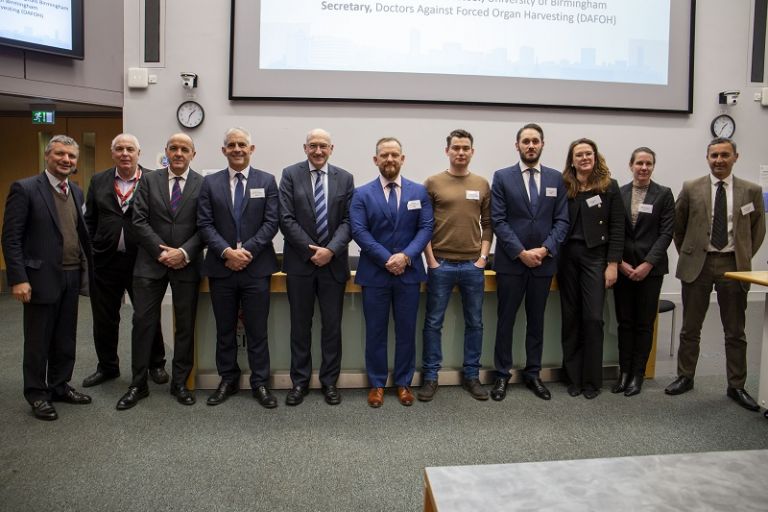
Human trafficking for the purpose of organ harvesting: strengthening the response
Conference organised by The City Law School and School of Communication & Creativity in collaboration with the Metropolitan Police Service.

