

The Psychology PhD/MPhil offers you the chance to develop a substantial and original body of new research involving the discovery of new facts or through the reformulation of existing frameworks.
Key information
| Starting date | Deadline for application |
|---|---|
Duration
Psychology Postgraduate research degrees PhD/MPhil course Overview
You will join an established department with a history of pioneering research. We have a commitment to the traditions of the discipline and a clear vision of good research practice in Psychology.
We support a vibrant community of researchers and provide expert supervision on a range of specialist subjects. Current strengths include cognitive neuroscience, decision making and behavioural economics. Formal modules in advanced research methods are available if needed to provide you with understanding needed to advance your research.
Our purpose-built facilities include:
- Two state-of-the-art electroencephalography laboratories
- A transcranial magnetic stimulation laboratories
- A baby laboratory
- Behavioural laboratories with access to eye-trackers
- Psychophysiological recording suites
- A psychometrics test library.
You and your research will become an integral part of our dynamic research culture.
Structure
About the programme
The PhD programme in Psychology is designed to develop your skills as an independent scholar and give you transferable skills for the years after you finish.
What follows is general indication of a student trajectory. It must be borne in mind that because this is a research degree, each student’s programme will be specific to them and the topic they are researching.
Year 1
Depending on their existing qualifications and in discussion with their supervisor, in year one students may take one or more MSc level modules to furnish their core research methodological skills (see our Research Methods MSc) and subject-specific knowledge (see our MScs in Organisational Psychology, Behavioural Economics, Health Psychology and Clinical, Social and Cognitive Neuroscience).
The majority of time in Year 1 is spent formulating a research question and writing a literature review. Some students may also have begun data collection.
Year 2
In year two students will finalise their literature review, finalise the overall shape of their thesis and carry out the bulk of their empirical and analytic work. Some may need to take one of several advanced level training courses that are available to build expertise in subject-specific research methodologies.
Year 3
In year three students will conclude their empirical work and focus on writing up their thesis. They will also seek to disseminate their work in the form of peer-reviewed publications and/or conference presentations and identify opportunities for the next stage of their career.
Year 4
We expect the majority of students to complete their write-up within a three-year period. However, a fourth year may be used for the final preparation and submission of the thesis and the completion of any amendments that may be requested.
MPhil award
It is important to note that all students on graduate research programmes are initially registered for an MPhil award. Promotion to registration to PhD is not automatic, but contingent on the satisfactory outcome of a formal review process some time in the second year of study.
The Award
- For the award of a psychology PHD candidates are required to demonstrate the following:
- a full understanding of previous research literature and current academic and professional thinking
- the ability to undertake sustained, high level research and master the theoretical (and where appropriate, practical) aspects of the subject areas relevant to the research field
- the ability to communicate the subject matter of the research field, and the conclusions of the particular research project, in the accepted academic form of a research thesis
For full details about the City psychology PhD programme structure, please see the Guide for Research Students.
Requirements
Applicants should demonstrate the following:
- A track record of high academic achievement, demonstrated by a good undergraduate degree with at least a second class (upper division) pass or equivalent
- Good research methodological skills as demonstrated through relevant research experience and/or a good Masters level degree with at least a pass with merit (or equivalent)
- Excellent communication skills, both written and oral (see also the section on English language Requirements)
- Excellent planning and time-management skills.
English requirements
For students whose first language is not English, the following qualifications will meet the English language requirement for entry to a postgraduate course of study:
- A first degree from a UK university or from the CNAA.
- A first degree from an overseas institution recognised by City as providing adequate evidence of proficiency in the English language, for example, from institutions in Australia, Canada or the USA.
- GCE O-level/GCSE English language or English literature, grade C minimum.
- Cambridge ESOL CPE (Certificate of Proficiency in English) at grade C or above.
- An overall score of 7 in the English Language Testing System (IELTS) with a minimum of 7.0 in writing.
- Satisfactory standard in the verbal section of the Princeton Test (GMAT).
- US SAT with 500 in verbal performance.
- Warwick English Language Test (WELT) with pass grades of BBC minimum.
- Other evidence of proficiency in the English language which satisfies the Board of Studies concerned.
For more information see our main entry requirements page.
Visa requirements
If you are not from the European Economic Area / Switzerland and you are coming to study in the UK, you may need to apply for a visa or entry clearance to come to the UK to study.
The way that you apply may vary depending on the length of your course. There are different rules for:
- Students on courses of more than six months
- Students on courses of less than six months
- Students on a pre-sessional English language course.
For more information see our main Visa page.
Fees and funding
Full-time Home/UK:£5,000 per year
Part-time Home/UK:£2,500 per year
Full-time International:£13,500 per year
Part-time International:£6,750 per year
Fees for doctoral candidates are charged annually and cover registration, supervision and examination.
Fees are subject to review each year and may vary during your period of registration. Where applicable, fees for City's programmes will be subject to inflationary increases in each academic year of study commencing in September. Our policy for these increases is set out in our terms and conditions of study.
Where eligible, PhD applicants to the department of Psychology may apply for the following fee-waiver studentship:
Who we are looking for:
Applications are invited from exceptional UK, EU, and international graduates wishing to pursue cutting-edge research that will accelerate our understanding of a group of autistic individuals who are currently underrepresented in research. We are keen to receive applications from candidates who have experience with autistic individuals.
How to apply
For more information on how to apply please see the project overview please contact Dr Lúcia Garrido.
Support for PhD study
Prospective students are encouraged to explore doctoral Grants and funding opportunities such as:
- Research Council studentship awards, if available.
Our bursaries are non-repayable sums of money granted by the University, usually based on need.
Our loans are repayable sums of money granted by the University or other body.
Our scholarships are when the University pays towards your Study fees. You may also be eligible for further funding.
Postgraduate Doctoral Loans
The Government has introduced a new Postgraduate Doctoral Loans scheme which can provide a loan of up to £25,000.
This will be over three years to support study for a doctoral degree.
A Postgraduate Doctoral Loan can help with course fees and living costs while you study. It can be used alongside any other forms of support you may be able to receive.
For more information, please see our Postgraduate Doctoral Loans page.
Additional expenses
Some of our degrees may involve additional expenses which are not covered by your tuition fees. Find out more about additional expenses.
Academic support
City has a well-established structure and processes to support your research.
Supervision
All research students will have a supervisory team of at least two members of academic staff. At least one of them will have experience in seeing research students through to successful completion and both will be actively engaged in an area of research relevant to the student’s field of inquiry.
See here for details about our academic staff and their areas of expertise.
Training
Besides our MSc level courses the department also offers a number of advanced level training workshops for specific research methodological skills. Moreover, wider transferable skills are developed through provisions within the department and through the City Doctoral College.
Current workshops include:
- Health and Safety in Cognitive and Clinical Neuroscience
A induction on ethical and health and safety issues related to cognitive neuroscience methods.
Convenors: Dr. Elliot Freeman, Dr. Kielan Yarrow and Dr. Sebastian Gaigg - Electroencephalography
This full-day workshop in one of the department’s EEG laboratories will teach students how to prepare participants for testing and collecting.
This full-day workshop in one of the department’s EEG laboratories will teach students how to prepare participants for testing and collecting.
Convenors: Prof. Bettina Forster, Dr. Corinna Haenschel and Dr. Beatriz Calvo-Merino - Transcranial Magnetic Stimulation (TMS) and Transcranial electrical stimulation (TES)
On this full-day workshop students will learn how to prepare participants for testing, how to collect data and how to filter
Convenors: Dr. Kielan Yarrow and Dr. Elliot Freeman - Randomised Controlled Trials
Randomised controlled trials (RCTs) are used to obtain a reliable evaluation of treatment effectiveness in healthcare interventions. This workshop will provide an introduction to the design, analysis and reporting of RCTs.
Convenor: Dr. Katy Tapper - Discourse Analysis
This course will provide training in the use of discourse analytic methods of data analysis which can be used to develop a systematic understanding of the ways in which talk and text are constructed.
Convenor: Prof. Carla Willig
Dates: Friday in the autumn term - Interpretative Phenomenological Analysis (IPA)
This workshop will discuss main philosophical and epistemological positions of the methodology together with a brief historical account concluding with a discussion between IPA’s phenomenology and Neurophenomenology.
Convenor: Dr. Pavlos Filippopoulos
Transferable Skills
To foster our students’ broader academic and communication skills, they are required to attend a fortnightly research student seminar at which they are expected to present on their work at least once a year.
The seminar takes the format of an oral conference session in which two students typically present for 20 minutes, with 10 minutes allowed for questions and discussion.
Depending on their level of experience, they may help run small-group seminars or contribute to lectures on our undergraduate programme, or they may host stats clinics and run laboratory sessions on statistical analyses. All teaching activities are supervised by a senior member of academic staff.
How to apply
Applications are now open.
To apply, you should submit the following documents:
- One copy of the Online Research Degree Application Form (full-time) or Online Research Degree Application Form (part-time)
- Your research proposal
- Testimonials from at least two academic referees sent by email from an official work (not private) email account
- Copies of your degree transcripts and certificates (originals or certified copies). If your application is successful we will need to verify the original hard copies before a final offer is made
- Proof of your English language proficiency (if English is not your first language)
- A non-technical summary of the proposed research of no more than 400 words.
See guidance on writing your research proposal.
Please note that we will not consider incomplete applications.
Instructions to referees
Thank you for your contribution to our admissions process, reports from academic referees are a vital part of our information gathering about applicants for Research Degrees. In your testimonial, please focus your report on the following issues:
- Give evidence of the applicant's capacity to undertake high quality research in psychology
- Explain any particular features of the applicant's prior training that you consider to be of particular importance
- Comment on the applicant's determination and motivation for studying for a research degree
- Indicate whether or not the applicant has discussed their research interests with you prior to applying to City
- Comment on the applicant's honesty and integrity.
Apply now
-
Select one of the available starting dates to start your application.
-
Select one of the available starting dates to start your application.
For further application enquiries please contact our PGR enquiries team.
Find a supervisor
See our full list of academic staff and potential supervisors in Department of Psychology.
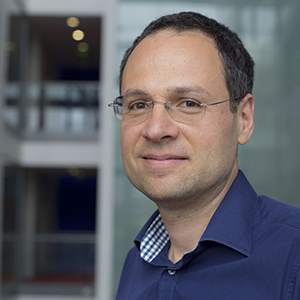
Professor Emmanuel Pothos
Professor of Psychology
Department of Psychology
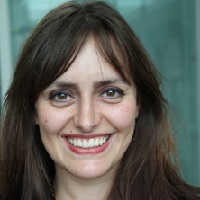
Professor Beatriz Calvo Merino
Professor in Cognitive Neuroscience
Department of Psychology
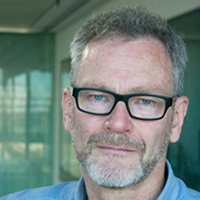
Professor Dermot Bowler
Professor of Psychology
Department of Psychology
Dr Andreas Jarvstad
Senior Lecturer
Department of Psychology
Our students
See our full list of academic staff and potential supervisors in Department of Psychology.