

The Music PhD/MPhil gives you the opportunity to develop advanced knowledge in your chosen field. The submission requirements for our highly regarded PhD are flexible, as are the final submission regulations
Research centres and groups
Key information
| Starting date | Deadline for application |
|---|---|
Duration
Music Postgraduate research degrees PhD/MPhil course Overview
You will shape your own experience of the Music PhD/MPhil with excellent support along the way. You will be allocated a principal supervisor who is a world-leading researcher.
Supervision will involve regular meetings for feedback on your work, methodological and theoretical guidance and the opportunity to explore deep research questions in the subject of Music.
The Department of Performing Arts has a vibrant research culture, and you will benefit from weekly research seminars and seminars by distinguished guest academics as well as concerts and a postgraduate conference.
For instrumental and vocal composers the Department has three ensembles in residence. EXAUDI vocal ensemble, Plus Minus and the City Pierrot Ensemble play an integral part of the wider performance culture, allowing composers to have works performed by our own and visiting ensembles.
Structure
Research students follow individually supervised programmes leading either to the submission of a thesis (musicology, ethnomusicology), or a portfolio of practice-based work (instrumental and vocal composition, studio-based digital or electroacoustic work, performances, recordings, software, etc.). This is accompanied by a smaller component of written work.
Please note: the thesis for the latter option is not a commentary on the student's practical work but a dissertation on an area of research related to the student's practice-based interests.
Initially students are registered for the MPhil degree. Transfer to PhD status occurs once good progress has been made on the initial stages of the research.
The PhD will normally be completed after three years of full-time research (five years part-time). Then followed by a one-year period of 'writing-up' during which the final preparation of the thesis or portfolio takes place.
Students intending to complete the MPhil will carry out two years of full-time research (or three years part-time), plus the period of 'writing-up'.
Scholarship
- Archival research for historical musicology
- Byzantine and Modern Greek art music
- Choral music of the Slavic Orthodox churches
- Church music
- Critical Issues in Musicology
- Diaspora Studies
- Ethnicity, Identity and Music
- Ethnographic approaches to music research, including auto-ethnography
- Ethnomusicology of Western musics
- Gender and sexuality and their representation in music
- Greek song and other musical traditions
- Historiography of Music
- Historical performance practice, especially for Medieval, early Renaissance, 19th and early 20th music
- Improvisation
- Middle Eastern Music, traditional and contemporary
- Modernism in music and other art forms
- Music Analysis, including the Analysis of Performance
- Music and cinema, including Middle Eastern cinema
- Music and creative processes in global contexts
- Music and globalisation
- Musical notation and written musical cultures
- Music in social, historical and geographical context, especially issues of ideology and representation
- Music videos and music for television and video games
- Music in cultural history
- Music in 19th-century Russia and the Soviet Union
- Music in 20th-century Germany, including the Third Reich
- Music and Technology
- Musical representation in contemporary media
- Nineteenth-century music, especially that of Liszt and Brahms
- Performance Studies
- Popular music studies
- Practice-as-Research and associated debates
- Reception history
- Sound Studies
- Studies of musical performance, both live and recorded
- The Frankfurt School, Theodor Adorno and Marxist aesthetics
- The study of musical instruments and techniques
- Twentieth-century and contemporary music, musical practice and aesthetics
- Urban Ethnomusicology
- Western and Eastern Chant
Practice
- Analysis and aesthetics of composition
- Composition for film, television and videogames
- Composition for Improvisers
- Composition for instruments and Interactive electronics
- Computer-assisted composition and machine learning for music
- Early Vocal Performance
- Guitar Performance
- Historically-informed performance
- Improvisation and Free Jazz
- Instrumental and vocal composition
- Live electronic performance
- Piano Performance
- Popular Music Performance
- Recording techniques
- Sonic Practice and Sonic Art
- Sound installation and site-specific performance
- Studio composition
- Techniques and aesthetics for the performance of new music
- Trombone Performance
For full details about the City PhD programme structure, please see the Guide for Research Students.
Requirements
Applicants should normally hold a Masters-level degree in music or an area cognate to their area of research.
English requirements
For students whose first language is not English, the following qualifications will meet the English language requirement for entry to a postgraduate course of study:
- A first degree from a UK university or from the CNAA.
- A first degree from an overseas institution recognised by City as providing adequate evidence of proficiency in the English language, for example, from
- institutions in Australia, Canada or the United States of America.
- GCE O-level/GCSE English language or English literature, grade C minimum.
- An overall IELTS score of 7.0, including 7.0 in writing, with no component score below 6.0. (Please note, IELTS test scores are valid for a maximum period of 2 years from the time at which the test was taken).
- Other evidence of proficiency in the English language which satisfies the board of studies concerned.
For more information see our main entry requirements page.
Visa requirements
If you are not from the European Economic Area / Switzerland and you are coming to study in the UK, you may need to apply for a visa or entry clearance to come to the UK to study.
The way that you apply may vary depending on the length of your course. There are different rules for:
- Students on courses of more than six months
- Students on courses of less than six months
- Students on a pre-sessional English language course
For more information see our main Visa page.
Fees and funding
Full-time Home/UK:£5,110 per year
Part-time Home/UK:£2,560 per year
Full-time International:£13,630 per year
Part-time International:£6,810 per year
Fees for doctoral candidates are charged annually and cover registration, supervision and examination.
Fees are subject to review each year and may vary during your period of registration. Where applicable, fees for City's programmes will be subject to inflationary increases in each academic year of study commencing in September. Our policy for these increases is set out in our terms and conditions of study.
You pay the above fees (which usually increase each year in line with inflation) annually until you are ready to go into 'writing up' status, whereby you are no longer researching your research topic and are solely writing up your thesis for examination.
You will not be required to pay further tuition fees but you will be charged the writing-up fee of £300 which will cover you for the duration of the writing-up period (a maximum of 12 months for full-time and 18 months for part-time students).
If a student fails to submit their thesis within the maximum writing-up period, they will be reverted to full registration (full-time or part-time depending on their status before moving to writing up) and will be required to pay the full fees.
Students will only be expected to pay for the time taken to complete the thesis and once the thesis has been submitted the remaining proportional fees will be refunded to the student.
Fees are payable upon registration. Details of methods of the payment of tuition fees can be found on our fees and funding pages.
Support for PhD study
Prospective students are encouraged to explore doctoral Grants and funding opportunities such as:
- Research Council studentship awards, if available.
Our bursaries are non-repayable sums of money granted by the University, usually based on need.
Our loans are repayable sums of money granted by the University or other body.
Our scholarships are when the University pays towards your Study fees. You may also be eligible for further funding.
Postgraduate Doctoral Loans
The Government has introduced a new Postgraduate Doctoral Loans scheme which can provide a loan of up to £25,000.
This will be over three years to support study for a doctoral degree.
A Postgraduate Doctoral Loan can help with course fees and living costs while you study. It can be used alongside any other forms of support you may be able to receive.
For more information, please see our Postgraduate Doctoral Loans page.
Additional expenses
Some of our degrees may involve additional expenses which are not covered by your tuition fees. Find out more about additional expenses.
Academic support
City has a well-established structure and processes to support your research.
Supervision
Each student is assigned a supervisor whose role is to:
- Ensure that the student develops a detailed research plan and has clear targets
- Assess research training needs
- Enable access to necessary resources
- Encourage and support initiative and motivation
- Provide regular feedback on work.
City runs an induction programme, covering training in research methods, computer and library facilities, and discussion of research students' needs.
All research students present their work in progress in the Department's annual Research Seminar Series which acts as a regular meeting point for research students. There are also occasional postgraduate seminars in specialist areas, including a postgraduate composers' listening group.
Training
Find out more information on the central provision for doctoral students in the City Doctoral College.
Research Environment
We have strong links between research and postgraduate teaching. Research students benefit from the Department of Performing Arts' integration of Western and non-Western music, and an interdisciplinary approach that encourages studies related to popular culture and contemporary creative practice, performance, technology, aural culture and world music.
Research students are studying areas as diverse as London-based Klezmer music, 18th-century publishing practices and the nature of collaboration in live electroacoustic performance.
All students benefit from participation in a weekly research seminar series, attended by both staff and student researchers across the Department. Other events held throughout each term include public concert series, specialist seminars and student performances.
Research Excellence Framework (REF)
The Research Excellence Framework (REF) 2014 rated 87% of our research as either 'world leading' (4*) or 'internationally excellent' (3*).
This included 100% of our research impact being considered 'outstanding' (4*) or 'very considerable' (3*) and a research environment that was similarly assessed at 100% in being 'world leading' (4*) or 'internationally excellent' (3*) for its vitality and sustainability.
The department was placed 11th out of 84 submissions for the proportion of 4*+3* activity and is in the top 25% of all submissions nationally for Grade Point Average (GPA).
How to apply
Preliminary Enquiries
To be considered for the MPhil/PhD programme, one of our staff must be willing to supervise your research.
Students are encouraged to contact a staff member from the School of Communication & Creativity whose research interests accord with your own prior to making an application. Their profiles can be found here.
See here for more information on Sound Practice and Research at City.
We accept applications on an ongoing basis for entry in late September and early February. There is no formal application deadline, but it is advisable to apply as early as possible due to the limited availability of supervisors.
To apply online, you will need to submit the following supporting documents:
- A full curriculum vitae specifying academic qualifications, and experience or achievements relevant to the application and the research proposal.
- A research proposal, giving as much details as possible about the research area, and the reasons for carrying out the research.
- An account of the ideal resources - hardware, software and supervisory support - needed to enable the work to be carried out.
- An example of written work which demonstrates writing skills and intellectual ability.
- Compositions: composers should submit a folio of recent compositions with recordings if possible. Electroacoustic composers should submit digital recordings.
- Copies of your degree certificates and transcripts.
- Official work e-mail addresses (not private ones) for two academic referees (or one academic and one professional referee where appropriate)
- Proof of your English language proficiency (if applicable).
When this information is received the application will be assessed by the relevant academic staff.
Further information or an interview may be required. The outcome will be reported to the applicant as soon as is practicable.
Please contact Newton Armstrong or Richard Thornbury for further information
Writing Your Research Proposal
Please limit your proposal to no more than 4 sides of A4 (excluding bibliography).
Your research proposal should include an abstract setting out the central questions of the proposed research and situating it within a broader context of existing work in the area.
You should include discussion of relevant literature and the ways in which your research will contribute to knowledge in the field.
The proposal should include a section on methodology and an initial plan and timeline to indicate how you will complete the research within the period of study.
See here for guidance on how to prepare your research proposal.
For further application enquiries please contact our PGR enquiries team.
Potential PhD projects
Find a supervisor
See our full list of academic staff and potential supervisors in Department of Performing Arts.

Professor Laudan Nooshin
Professor of Music
Department of Performing Arts
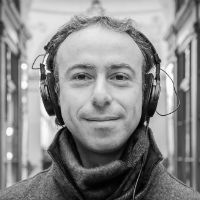
Dr Aaron Einbond
Reader in Music
Department of Performing Arts
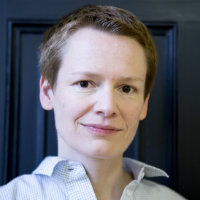
Dr Claudia Molitor
Reader Performing Arts(E&R)
Department of Performing Arts
Professor Ian Pace
Professor of Music, Culture and Society
Department of Sociology and Criminology