

The Centre for Cultural and the Creative industries has a long history of internationally renowned research and scholarship, and is one of the world’s oldest places of specialisation in this field.
Key information
| Starting date | Deadline for application |
|---|---|
Duration
Culture and Creative Industries Postgraduate research degrees PhD/MPhil course Overview
As a researcher for the Cultural and the Creative Industries PhD/MPhil programme, you will join a diverse, highly specialised international research community. Encompassing sociology, geography, economic development, cultural studies and policy development
Areas of expertise include:
- Challenges to Identity, Place, and Practices
- Heritage and the urban organization of culture
- In/equalities and labour conditions in the cultural industries
- Mediated identity, consumption and intimacy
- Lack of diversity in the creative economy, and its representations
- Creative Economy policy for cities, and (world) regions
We have close links with national and international agencies including the UN. This will give you a unique insight into how our research translates into solid outcomes.
You may also have the opportunity to be involved with projects being carried out by scholars working with these organisations.
Structure
The Programme
The PhD at City is designed to assist you with your research project and give you transferable skills for the years after you finish. The PhD programme is structured as follows:
Year 1 - Student’s work with their supervisors to develop the literature review in their specific area. They will outline their methodology and plan for the thesis. They participate in peer seminars and research events in the department.
Year 2 - In order to progress from MPhil to PhD students present an upgrade paper. They will outline their review of the literature, their methodology and gives an indication of the overall shape of the thesis.*
Year 3 - The formal requirements in third year are focused around the writing up and submission of the thesis.
Year 4 - The fourth year of a PhD is only used as a writing up year.
*Students on graduate research programmes are initially registered for an MPhil award. Promotion to registration to PhD is not automatic, but contingent on the satisfactory outcome of a review process.
The PhD programme concludes with the candidate submitting their research in the form of a PhD thesis. Then attending a viva voce examination with two examiners, at least one of whom will be external to City.
Candidates are required to demonstrate the following:
- understanding of previous research literature and current academic and professional thinking
- the ability to undertake sustained, high level research and master the theoretical (and where appropriate, practical) aspects of the subject areas relevant to the research field
- the ability to communicate the subject matter of the research field, and the conclusions of the particular research project, in the accepted academic form of a research thesis.
The research thesis/dissertation must contribute to the advancement of knowledge and the understanding of the subject.
An MPhil thesis should demonstrate evidence of systematic study. It should be either a record of original work or a critical exposition of existing knowledge. A PhD thesis should similarly demonstrate evidence of systematic study and in addition make a new contribution to the subject.
Please visit the Essential Information section of the Doctoral College page.
Requirements
Entry requirements
Candidates should normally have or be expecting an upper second or first class degree in any related discipline. We also expect a Master's degree or equivalent with the dissertation component marked at Distinction level (70+).
However, we also welcome applications from mature students with substantial research experience. Candidates can be considered for a PhD by Prior Publication.
We also expect:
- A mature and independent attitude to research
- Adherence to the values of the Student Contract
- Commitment to taking part in a community of scholars
- An open attitude to the development of your own research
- Generous and constructive criticism of the work of others presented in seminars
- An understanding of the National Qualifications Frameworks
- Willingness to present working papers in School of Communication & Creativity Seminars and national and international conferences.
English requirements
Under City regulations research theses must be submitted in English. Candidates whose first language is not English will be required to show evidence of a high standard of written and spoken fluency.
Examples of this include a degree from a British university or a minimum overall score of 7.5 and no less than 7.0 in any of the subtests (Listening, Reading, Writing, Speaking) in the International English Language Testing System (IELTS) administered by the British Council. For further information about IELTS, please see their website.
For more information see our main entry requirements page.
Visa requirements
If you are not from the European Economic Area / Switzerland and you are coming to study in the UK, you may need to apply for a visa or entry clearance to come to the UK to study.
The way that you apply may vary depending on the length of your course. There are different rules for:
- Students on courses of more than six months
- Students on courses of less than six months
- Students on a pre-sessional English language course.
For more information see our main Visa page.
Fees and funding
Full-time Home/UK:£5,110 per year
Part-time Home/UK:£2,560 per year
Full-time International:£13,630 per year
Part-time International:£6,810 per year
Fees for doctoral candidates are charged annually and cover registration, supervision and examination.
Fees are subject to review each year and may vary during your period of registration. Where applicable, fees for City's programmes will be subject to inflationary increases in each academic year of study commencing in September. Our policy for these increases is set out in our terms and conditions of study.
You pay the above fees (which usually increase each year in line with inflation) annually until you are ready to go into 'writing up' status. Whereby you are no longer researching your research topic and are solely writing up your thesis for examination.
You will not be required to pay further tuition fees. You will however be charged the writing-up fee of £300 which will cover you for the duration of the writing-up period (a maximum of 12 months for full-time and 18 months for part-time students).
If a student fails to submit their thesis within the maximum writing-up period, they will be reverted to full registration (full-time or part-time depending on their status before moving to writing up). They will then be required to pay the full fees.
Students will only be expected to pay for the time taken to complete the thesis. Once the thesis has been submitted the remaining proportional fees will be refunded to the student.
Fees are payable upon registration. Details of payment methods for tuition fees can be found on the Post Graduate Fees section of the website.
Support for PhD study
Prospective students are encouraged to explore doctoral Grants and funding opportunities such as:
- Research Council studentship awards, if available.
Our bursaries are non-repayable sums of money granted by the University, usually based on need.
Our loans are repayable sums of money granted by the University or other body.
Our scholarships are when the University pays towards your Study fees. You may also be eligible for further funding.
Postgraduate Doctoral Loans
The Government has introduced a new Postgraduate Doctoral Loans scheme which can provide a loan of up to £25,000.
This will be over three years to support study for a doctoral degree.
A Postgraduate Doctoral Loan can help with course fees and living costs while you study. It can be used alongside any other forms of support you may be able to receive.
For more information, please see our Postgraduate Doctoral Loans page.
Additional expenses
Some of our degrees may involve additional expenses which are not covered by your tuition fees. Find out more about additional expenses.
Academic support
City has a well-established structure and processes to support your research.
Supervision
Research students are normally appointed a supervisory team consisting of at least two supervisors. One of these will be designated as the first point of contact with responsibility for ensuring effective supervision is provided.
PhD Supervisor
CCI allows students - in consultation with their supervisor - to create a unique programme of study tailored to their needs within a broader framework of expectations. These cover: theory, history, methods/philosophy and substantive, detailed methods, as well as writing and presentation workshops.
The supervisor offers advice, and guides the student to successful and timely completion of the thesis. This is likely to be more prescriptive and directive in the early part of the PhD career. The guidance will become more advisory and dialogical in latter stages.
Training
For more information, please see the visit the City Doctoral College.
Research Environment
The Culture and Creative Industries PhD programme offers the support and resources you need to complete your doctorate. This includes:
- Tailor-made supervision by our nationally- and internationally-renowned staff
- Research training within the Department
- Use of a specialist reference archive of more than 6,000 items unique to City. Also access to libraries and major London collections such as the British Library and the Arts Library of the Barbican Centre
- Membership of the Department Seminar group. Who meet regularly to participate in seminars given by research students and/or invited speakers from academe and the industry
- The chance to publish your research in the Department's peer reviewed journal Culture, Criticism and Management
- The support of the School's knowledge transfer programmes to provide insight into applied research
- Working as part of a lively research community made up of students from all over the world with diverse educational and career backgrounds.
How to apply
We accept applications on an ongoing basis for entry in late September. There is no formal application deadline, but it is advisable to apply as early as possible due to the limited availability of supervisors.
Your research ideas should broadly match those of a nominated CCI staff member. You are advised to contact them ahead of your application in order to develop a potential research focus.
To apply online, you will need to submit the following supporting documents:
- A copy of your research proposal
- Copies of your degree certificates and transcripts
- Official work e-mail addresses (not private ones) for two academic referees (or one academic and one professional referee where appropriate)
- Proof of your English language proficiency (if applicable).
When this information is received the application will be assessed by the relevant academic staff. Further information or an interview may be required. The applicant will be contacted if this is the case. The outcome will be reported to the applicant as soon as is practicable.
See guidance on writing your research proposal.
For further application enquiries please contact our PGR enquiries team.
PhD projects
Find a supervisor
See our full list of academic staff and potential supervisors in Department of Media, Culture and Creative Industries.
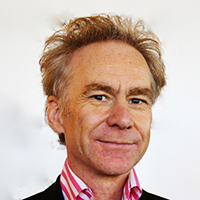
Professor Andy Pratt
Professor of Cultural Economy & Director, CCCI
Department of Media, Culture and Creative Industries

Dr Diana Yeh
Associate Dean EDI.
Department of Media, Culture and Creative Industries

Dr Jenny Mbaye
Reader in Culture & Creative Industries
Department of Media, Culture and Creative Industries